
As mentioned in my MOC Report, I had the pleasure of meeting Zach at the event and I also had the pleasure of finally hearing for the first time the famous ZMF headphones. As mentioned in the report, interacting with Zach, the mastermind behind ZMF, was an absolute pleasure. His persona radiated warmth, making him an exceptionally affable individual to converse with. His profound passion for his craft was unmistakably apparent, permeating every interaction, every product, and every note produced by his remarkable headphones.
Check out the original video review here. The sound was bad. It was recorded using the microphones from Bose QuietComfort 2. At least you can get an idea of how those headphones perform in a windy environment. I have tried to redo the video with better audio here.
I’ve got some exciting news to share. Two of my favorite persons in this industry have collaborated with Zach, leading to the introduction of ZMF headphones in Romania. Sandu from Soundnews played a pivotal role in connecting Zach with Nucu from Rockna Audio, who also runs an audio store. So now, at last, we have a local distributor for ZMF headphones right here in Romania!


Intro & Specs
The Caldera headphones arrived in an incredibly sturdy box. If there’s an apocalypse, I bet the box would survive :)).

I was genuinely taken aback by the sheer number of earpads provided to test with the Caldera. I could tell I was in for some fun testing sessions. My review unit sports redwood burl wooden cups, and I must say, they are a sight to behold. There’s this unmistakable sense of luxury you get from a finely crafted custom item. Just looking at those wooden cups and the entire headphone is a treat. Additionally, the headband deserves praise for its role in comfort; I wore them for extended periods without feeling any pressure.
If you’re curious about ZMF’s backstory and the journey to creating Caldera, you can delve deeper here.
The name is referential of both the concave grille shape and the rare earth magnetic rock revealed in the explosive act leading to its creation. Volcanic eruption captured both the ethos an impact we felt when listening to the Caldera.
After modding, breaking, and completing hundreds of Fostex t50rp mods over the years I spent a lot of time staring at planar drivers. I tried experimenting to make the drivers sound effortless, dynamic and resolving. When modding though, I was always starting backwards, reverse engineering a driver someone else created. I dreamt of making my own “from scratch” planar driver when ZMF transitioned to dynamic driver headphones, but with so many amazing planar’s out, I didn’t want to be reductive, or redundant. After a lot of failed experiments, and over 6 years of trying, the Caldera driver, CAMS (Caldera Asymmetrical Magnet Structure), and Atrium Damping System; the magic of ZMF’s proprietary planar technology has been born.
Tuning the Caldera has been a trick, in that with ADS, CAMS and pad options, there were more configurations within that system than I could wrap my brain around. With all the talk of the Harman curve in the last few years, I’ve done extensive testing on what parts of the curve my particular preferences align with, and which don’t. For me, I really appreciate the upper mids of the Harman target – as the ascent of the curve from 1-3 KHZ does meet my preferences pretty closely, and seemingly even more-so with a planar driver than dynamic drivers. The toughest part of the process (with tuning in mind) , after testing about 20 materials via ADS, was the earpads. Most planar and dynamic designs are either fully perforated, or fully solid, with a number of current manufacturers using hybrid airflow design. I also realized, that with the CAMS system, that airflow was “fanned” out. With this in mind I designed the Caldera pads, to have an asymmetrical angled shape, where the thickest part of the pad in behind and under each ear, and the airflow “fans” out at a similar angle towards the ear that is imparted by the magnet design. This is illustrated below – showing how the airflow is “uninterrupted” as it makes it’s way to the ear.
With so many new facets in play, the Caldera is a completely new and novel design for ZMF and the world of planar magnetics. Patent Pending CAMS technology couple with also Patent-Pending ADS forms a dynamic duo, making for the most explosive planar experience that intertwines the ZMF sound, with Dynamic and Planar technology. Hearing the Caldera for the first time is an experience like no other, and we’re excited to take that hike up the mountain with you.
https://www.zmfheadphones.com/caldera-acoustic-design

a. Trapezoidal shaped N52 (Neodymium) magnets containing an energy product or (BH)Max of 52MGOe (Mega-Gauss Oersteds). The N52 classification is one of the highest magnetic forces to size ratios and allows for this unique shaping without loss of magnetic tension. b. Four trace, eight pathway diaphragm; We have fully utilized the membrane surface, increasing both tension and movement, by minimizing the magnet footprint without compromising on force. c. Soundwaves are channeled toward the ear through the specialty fluted Caldera pads. The magnet shape functions so as not to block sound but direct it. d. A new iteration of the Patent-Pending Atrium damping system, custom fit for our planar drivers, allow for controlled rear damping which limits sound leak and maintains desired pressure.
e. Square shaped magnets commonly used in planar magnetic headphones (ie. original fostex rp technology) f. Four trace diaphragm for comparison; manufacturer would likely minimize traces per pathway g. With less active trace area the mobility of the diaphragm would be lessened. A typical compromise means further spacing of magnets yielding less tension h. Nullified trace response demonstrating the limits of squared magnet shapes. i. Without back end damping noise bleed and pressure loss make for a less controlled sound.
https://www.zmfheadphones.com/caldera-acoustic-design


Listening Impressions and Tests
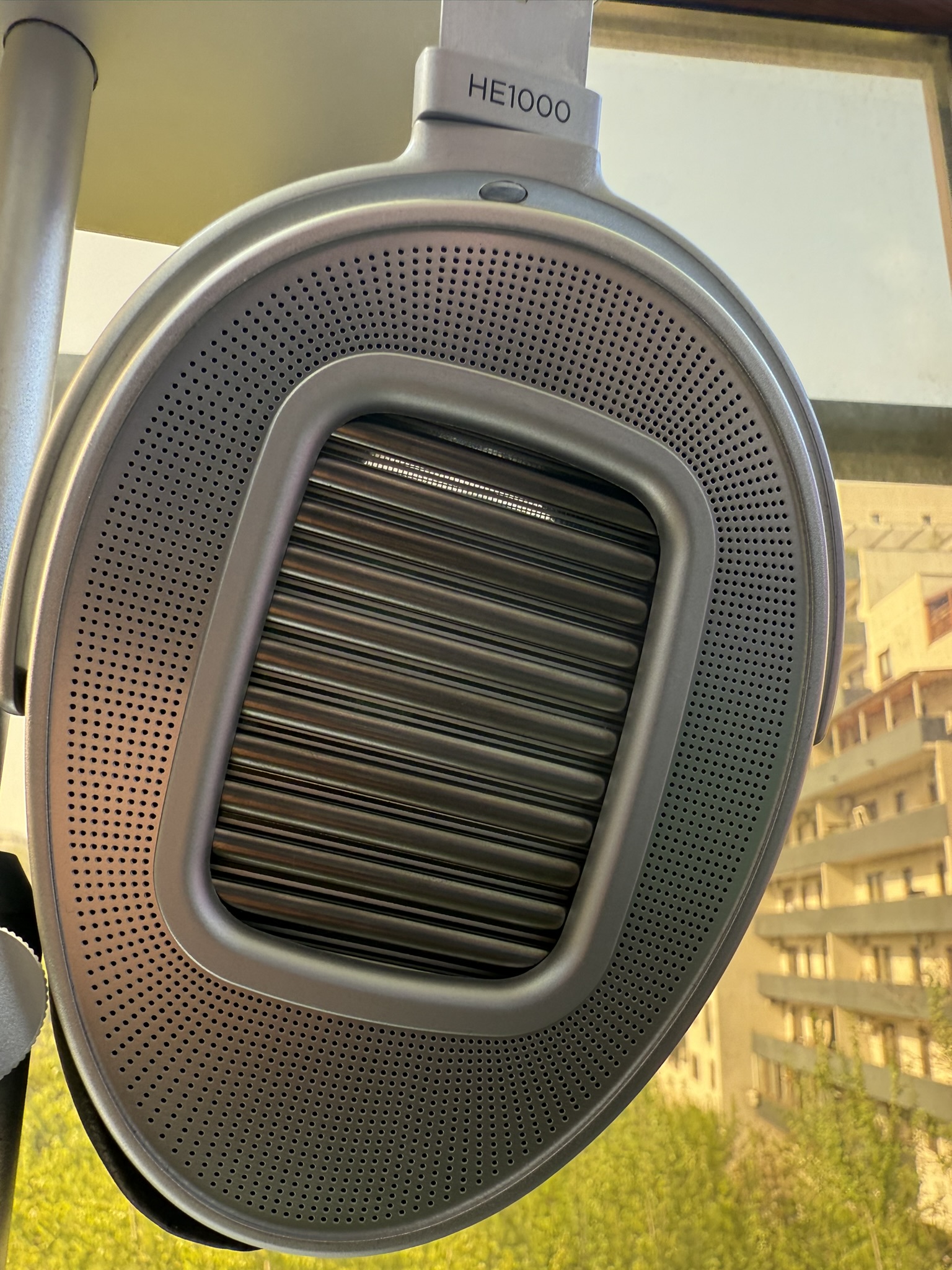
Before diving in, it’s important to lay out the equipment I used for this test. My setup was as follows: PC Matrix Element H powered by the Keces P8 linear power supply -> Audioquest Diamond USB -> Denafrips Gaia -> (i2s Audioquest Diamond) -> Rockna Wavelight (with balanced XLR 5.8v output, using Audioquest Sky XLR) -> Holo Bliss KTE. For headphones, I used both the Meze Elite and the Hifiman HE-1000SE.
As previously mentioned, I had a plethora of pads to test with: Stock Lambskin, Suede, Thin Lambskin, Thin Cowhide, Ultra Performance Pads, and Thick Cowhide. Just a heads-up: I’m not particularly handy, so experimenting with these took a fair amount of time. For those interested in the process of changing pads, I found this video helpful. I genuinely wish there was an easier mechanism for this, something along the lines of the magnetic system by Meze or Audeze Maxwell’s rotate-and-fix mechanism. On the upside, I did gain some dexterity as I went along, so it became somewhat more manageable. However, remember that everyone’s experience will differ due to variations in head size and shape. The silver lining? There’s a wide array of options to find the perfect fit.
Exploring the myriad of pads, I valued the unique sound alterations each introduced. I noted that the thin pads had a common characteristic: they rendered the upper midrange somewhat closer and produced a slightly more forward sound. On occasions, I felt a tad overwhelmed by some musical notes, akin to standing too close to a painting and needing to step back for a more comprehensive view. Additionally, these pads seemed to showcase a pronounced dip between 3-4kHz.

The ultra pads are decidedly the most forward of the lot, emphasizing details due to the increased presence in the midrange and upper midrange. However, there’s a small trade-off. While they bring out these details, there’s a slight reduction in the bass’s fullness, particularly in the sub-bass region. Despite this, the bass performance remains commendable overall.

The stock lambskin has a sound signature somewhat similar to the thin pads, displaying noticeable dips between 3-4kHz and 5kHz. However, I found its sound quite pleasant. Unlike with the thin pads, it didn’t give me that confronting “in your face” sensation.

I was pleasantly surprised by the Suede pads. Contrary to my usual experience, I didn’t feel like I sacrificed much bass. In fact, the bass felt quite full and resonant. Apart from their comfort, which means less heat for your ears, they provide an airier sound with a more pronounced presence and a relative linearity in the 2-4kHz range.

For me, the Thick Cowhide pads stood out as the favorite. They offered a soundstage that felt both deeper and more holographic. The midrange and upper midrange struck a good balance of presence and linearity. Instruments simply positioned better within the soundstage with these pads. Plus, I thoroughly enjoyed the sound they delivered. The bass, too, felt deeper and fuller.

All the pads :

The distortion levels of these headphones is very impressive, most of the frequency having a distortion around 0.1%.

Also, as suspected, no ringing is present on the Calderas.

This is the left/right for thick cowhide pads. Overall the channel balance looks good, with a few discrepancies over 10khz. I did not notice anything in my listening sessions, nor am I am sure that my mini ears dsp is capable of being accurate here.

Neil Young – Look out for my love
Neil’s voice truly captivated me. It boasted a natural presence: full-bodied, pristine, and teeming with texture. I was also taken by the staging, where everything manifested in a profoundly holographic manner. Every instrument and voice seamlessly fell into their rightful places. Both the guitars and drums were enthralling, characterized by their potent attack and well sustained, detailed decay.

The guitars were quite impressive from the beginning. This will be interesting to explain. They have a strong attack and a well sustained/detailed decay. They are quite tactile, but the plucks lacks a bit from the sharp byte in the attack. It’s still a very good and tactile experience. When the voice comes in, it presents the same qualities I wrote about above. The voice is absolutely stunning in presence, texture and tonality. Also, the scene is again very holographic and all the instruments fell into place around the voice in a very natural and unobstructive way.

The saxophone in this song sounded divine. The sax is part of the “wood wind” instrument category. I am mentioning this, because the soul of the “wind” is captured by Caldera beautifully. The fullness, the texture of the sax is absolutely mesmerizing. This is not an easy thing to achieve. With other headphones, you might get a discrepancy in the sax singature, because one part of the frequency is too shouty or not present enough. An un-even experience is when for example the sax hits a higher note and it throws you out of the musical enjoyment/out of the magical moment, because it was too harsh. Caldera presented everything perfectly and I just let myself be enveloped by the song and fell entirely into the musical experience portal.

The bass in ‘Caldera’ is a delightful experience. The drums resonate with the depth of thunder. Not only do they deliver a powerful punch, but they also carry a significant weight. Drawing a playful analogy from physics, if momentum is defined as P=M*V, then the ‘mass’ of this music ensures a formidable impact (the M is thick) . The drums were also impressive because of the awesome sustained control/decay it presented on the Caldera. To explain this a bit better, if a musical note is formed by attack and decay, in the context of the drums, if you remove the impact, the decay is also impressive, as it showed a sustained, detailed and controlled experience.
Now, let’s not forget about the other instruments in this song. Yes, the drums are the stars of the show, but the other instruments fall into place with good detail, holographic placement in the scene and overall good timing and detail.

Vivaldi – Concerti per Due Violini – Allegro
The experience was quite impressive from the start. I noticed the scene which I find to be incredibly well defined, in a deep/wide, holographic and natural manner. The violins and the instruments presented themselves in a very natural way into the scene. If you remember what I said about the bite of the guitar plucks in the passages from above, this is also a similar experience. The violin chords lacked a bit in bite compared to other headphones, probably because of the frequency response in the upper midrange/lower treble regions. However, they still had energy and dynamics with good details overall. I never felt any peak or harshness that could hinder my pleasant listening experience. Overall, the instruments were still full of life & well textured.

So…I did not listen to this kind of music for a while now. I also probably have a good reason for that. Most high end headphones just don’t sound very good with music like this. With Caldera I enjoyed myself deeply on this song and similar songs that usually sound like crap with other headphones. It was not too harsh, the bass was deep and punchy, the voice and holography effect helped a lot of creating a trippy musical experience. 2 other examples of song which I loved here are Justify and Renegade by ATB.

Gamming & Movies
I used the Caldera for both movies and games, and it was truly a pleasure. In fact, Caldera was my top choice for gaming and movies from all the headphones I have. While I played various games, I especially enjoyed using them with the new Starfield. The Caldera effortlessly drew me into the gaming atmosphere. Its soundstage is naturally expansive and holographic. Every sound, from voices to crowds, wind to explosions, and engine roars, fit perfectly into the scene. Everything just sounded incredibly realistic with Caldera.

Summary
Bass
The Caldera offers a truly delightful bass experience. Drums resonate with the thunderous depth, delivering both a powerful punch and considerable weight. Drawing a playful analogy from physics, if momentum is P=M*V, then the ‘mass’ of this music promises a significant impact—the M being notably thick. The bass further stands out due to its excellent sustained control and decay. In essence, even if the attack’s impact were removed, the decay remains remarkable, showcasing sustained, detailed, and controlled characteristics. In summary, the bass is punchy, well-controlled, and possesses impressive depth.
Midrange
The midrange is where Caldera truly shines. It consistently impresses across all frequencies, boasting excellent presence and textures from the lower to upper midrange. Instruments and voices come alive, from guitars and woodwind instruments to vocals, all exuding fullness, texture, and detail. This captivating midrange, combined with the robust bass, enhances both music and multimedia experiences. Zach’s emphasis on the 1-3kHz frequency range clearly pays dividends.
Treble
Compared to other headphones, Caldera leans towards the darker side, especially when juxtaposed with brands like Hifiman. While it might lack a bit of bite in the treble, it compensates by introducing ample air into the soundstage, ensuring it doesn’t feel overly dark. This balance makes the Caldera ideal for extended listening sessions, free from any harsh or grating sounds.
Dynamics/Transients/Energy
The headphones exude dynamism, energy, and enthusiasm. They have a potent attack, especially pronounced in the lower notes, and a detailed and controlled decay. While the attack might lack the sharpness observed in some other headphones, it compensates with its sheer weight and impact, akin to a heavily padded punch in boxing.
Vocals
The vocals are nothing short of entrancing. Their tonality, texture, and natural feel are standout features. The excellent frequency response, particularly between 1-3kHz—a nod to Zach’s focus—undoubtedly contributes to this allure.
Soundstage/Imaging
Instruments are distinctly identifiable and perfectly placed within the soundstage, which is expansive, deep, and holographically immersive. It’s one of the most authentic soundstages I’ve encountered, where everything harmoniously blends, and instruments complement vocals without overshadowing them.
Tonality
Reiterating what I’ve likely mentioned numerous times, the tonality of the Caldera is captivating. They don’t exhibit any harshness, and while leaning towards the darker end of the spectrum, they’re not overly so. The soundstage retains ample airiness, and everything is rendered with fullness, naturalness, and texture.
Comparison To Meze Elite

(Do note: Elite is represented by the purple headphone in the accompanying image.)

Comparing Caldera to Meze Elite presents a fascinating juxtaposition. The two headphones have more in common than not. They both excel as choices for extended listening, occupying a more euphonic niche. Upon switching to Elite, the initial thing that stood out was its slightly more expansive sound, perhaps attributable to its larger driver. Soundstage-wise, both headphones impress, with Elite leaning towards a wider presentation and Caldera offering more depth.
In terms of attack, Elite exhibits a tad more strength, but the gap isn’t substantial. Instruments exhibit a sharper bite with the Elite, especially during plucking of instruments. Caldera, in contrast, tends to sound fuller, compensating in its impact with a richer body and commendable control over decay. When it comes to bass, Caldera appears to edge out, presenting more detail and control, especially in the sub-bass regions. If I were to summarize, the bass feels more dynamic with Caldera.
Midrange dynamics reveal further intricacies. Caldera’s midrange presence is more prominent up to 3kHz, while Elite shines between the 3-4kHz range. This results in vocals and instruments feeling more present and full-bodied on Caldera, whereas Elite offers a touch more airiness and bite, primarily due to its strength in the 3-4kHz area. Notably, this specific frequency range distinction became apparent in songs by Scooter/ATB I referenced earlier, making Caldera my preferred choice. Elite still performed admirably, but the songs resonated more with Caldera’s rendition. For reference, neither was particularly enjoyable on the HE1000-SE.
Conclusively, the Elite might come across as slightly speedier and more detailed, but the differences are not that big. Both headphones have provided me immense pleasure, and the choice between them largely boils down to personal preference.
Caldera Vs Hifiman HE-1000SE

The green graph is the hifiman in the image below.

From the measurements I’ve observed, the tonal differences between these headphones are more pronounced compared to the Caldera vs. Elite comparison. Notably, the Hifiman HE-1000SE shows a marked prominence between 2.5kHz and 4.5kHz.
Kicking off with soundstage dimensions, the HE-1000SE appears to boast the tallest among the three headphones in contention. However, it doesn’t quite match the depth, width, naturalness, or holography that the other two offer. In terms of speed and detail, the HE-1000SE stands out. Yet, the overall listening experience doesn’t feel as cohesive. My primary reservation lies in its pronounced emphasis between 2.5 and 4.5kHz, which renders them somewhat shouty. While this characteristic can enhance detail and lend an airy quality to some tracks, it also has the downside of causing listening fatigue over extended periods. This also makes them feel less natural compared to the other two.
Touching upon bass performance, while the HE-1000SE does impress, the Caldera seems to exhibit a touch more presence, with a decay that’s more sustained and detailed. This observation could also be influenced by the HE-1000SE’s upper midrange overshadowing its bass output.


Conclusions
The Calderas have thoroughly impressed me. Their sound and tuning resonated deeply, often pulling me into a musical realm where I lost track of time. Over the past month, I’ve consistently found myself drawn to them, cementing their position as one of my all-time favorite headphones. Their natural and engaging sound signature, particularly in the bass and midrange, kept me captivated and anchored to my listening chair. Their versatility shone through, proving to be exceptional for gaming and movies as well. Without a doubt, I’ve frequently found myself instinctively reaching for these remarkable headphones.
In conclusion, these headphones are the most euphonic and enjoyable headphones I have found in this price range so far.




Leave a Reply