
I’ve been itching to try the Maxwells ever since I dropped by the Audeze booth at the München High-End Audio Show. Curious about that visit? Dive into my MOC report right here.
My enthusiasm hit the roof when I stumbled upon this product at the show, and I found myself gravitating back for another listen… and then another. I did not have control to chose my own music, but even so, they managed to impress me and I suspected them to be a great product.
My plan was to snag a pair the moment I touched down at home, but lo and behold, the local dealer, avstore.ro, was already out of stock. Yep, these beauties are flying off the shelves. I finally landed a pair in September, and guess what? They’re already sold out again.
Clearly, I’m not the only one head over heels for these headphones, and trust me, there’s a darn good reason for it. Buckle up as I walk you through every juicy detail in this review.
Check out the video review here.
Intro and Specs
You can find all the product details here.
Will also leave some information below.
Unrivaled Audio
Powered by Audeze’s latest 90mm planar magnetic drivers, with over 3X the driver area of leading competitors, Maxwell delivers powerful bass and pinpoint precision. Audeze drivers are trusted by leading recording and game studios worldwide, and feature patented technologies including Uniforce™ voice coils, Fluxor™ magnets, and Fazor™ waveguides. Experience class-leading high-resolution audio up to 24-bit/96kHz over Wireless or USB.
Forged through Competition
Hear your opponents coming before they find you, for an edge in every match. Leading pro gamers rely on Audeze headsets for their lightning-quick response and detailed sound. Never miss a teammate’s call-outs with quickly adjustable game-chat mix on PC, Mac, and consoles*.
Battle-Ready Durability and Comfort
Maxwell is built on an all-new premium chassis including aluminum yokes and a spring steel headband for durability. Play in comfort, all day, all night with the deluxe contoured earpads and replaceable suspension strap. Shut out the world around you with class-leading passive noise reduction from the reinforced dual-chamber earcups.
80+ Hour Battery Life
Charge 20min to Play All Day
Ultra-Low Latency Wireless
Play confidently with reliable stability and 3X the range versus standard 2.4GHz wireless, keeping you in sync with the action on-screen. Enjoy lossless-quality high-resolution audio with the latest in wirelesstechnology, compatible with LC3plus, LE Audio, and LDAC. Switch seamlessly between multiple devices with Bluetooth Multipoint.
Stunning Spatial Audio
Experience unparalleled audio with deeply immersive sound from the experts at Dolby Labs. Maxwell for Xbox includes a Dolby Atmos license ready to activate on your device. Download the Dolby Access app to personalize your spatial audio experience.
A.I. Noise Filtering Microphones
Get crystal-clear communications from Audeze’s FILTER noise reduction technology. Using a dedicated A.I. processor, background noise is removed instantly and automatically on any platform. The detachable boom microphone and on-board beamforming array make sure your voice is always heard.
First-in-Class Bluetooth 5.3 supports LE Audio, LC3plus, LDAC
https://www.audeze.com/products/maxwell-wireless-gaming-headset

Talk about packing a punch! The features in this baby might just have you double-checking to ensure you aren’t dreaming. And, for those of you who’ve peeked at my MOC report, you’ll know I’m all praise for its build quality. Rock-solid metal, robust yet elegant, and a sight for sore eyes – if I do say so myself.
Now, let’s break it down. This isn’t just any pair of headphones; we’re talking wireless capabilities with an ultra-low latency dongle, top-of-the-line Bluetooth supporting the highest bit-rates, and… wait for it… a mind-blowing 80 hours of battery life! Add in embedded microphones, but also a detachable microphone with noise suppression powered by AI, and you’ve got yourself what I’d call the Swiss Army knife of headphones.
Comfort? Say no more. The headband plays a starring role, ensuring you’re always in the comfort zone. Hours would go by, and even with their 490g weight, I did not feel any discomfort after hours of usage. That said, the headband’s adjustment system gave me a moment’s pause. It requires a tug to detach from the screws, and it took a couple tries (and maybe a pep talk or two) before the holes eased up. Silver lining? Once you’ve got your fit, and unless you’re frequently swapping out pads, you won’t be wrestling with it too often.
Good news for all you earpad enthusiasts out there: swapping is a breeze! Just grab the earpad, give it a twist in one direction to pop it off, pop the new one on, twist until you hear that satisfying click, and voila! Fresh pads in a jiffy.
Listening impressions and tests
I was about to delve into a full-blown description of my audio system, then it hit me… I just used the dongle and Bluetooth. How refreshing to keep things simple!
But simplicity didn’t stop me from putting these headphones through their paces:
- I tried them on both Windows and Mac OS, playing music via the dongle.
- I tested in-game sound with titles like Starfield on PC and Horizon Forbidden West on Playstation 5. I even evaluated movie playback on Windows.
- I explored all the given EQ presets and Dolby sound on Windows.
- I purchased the Wicked earpads for Maxwell and compared them to the stock pads.
- In a sound face-off, I pitted them against the Focal Bathys and my Sony WH-1000XM5. A side note: comparing the Maxwell to the XM5 in sound quality seemed almost unfair. The Maxwell easily came out on top for me.
Having owned them for over a month, I’m pretty sure I’ve only charged them once. The battery endurance? Impressive, to say the least.
Lastly, the Audeze app offers a platform for sonic tailoring, be it through default presets or your very own custom settings.

I found myself leaning towards the default Audeze setting, but there’s plenty of room for experimentation to match your taste. Stay tuned for a detailed rundown of measurements and differences in the section preceding the conclusion.
Additionally, I took the plunge and purchased the Dolby Access app for Windows 11 (a steal at around $18). It offers its own suite of settings to tinker with. One thing to note: any adjustment here seems to amp up the loudness of your tunes without actually tweaking the volume level. It’s a subtle shift, but something to be mindful of. These settings provide a diverse palette of sound profiles. For instance, I had a good time with both the Movie and Game presets, especially with the intelligent EQ turned off.

Games and Movies

These headphones have been a treat, not just for games, but for movies too. I took them for a spin with Starfield on Windows 11, pairing them with Dolby sound. The ambiance in Starfield was nothing short of vivid; it painted an animated, organic soundscape. No lags or delays caught my attention, and the audio positioning was on point. Explosions delivered a profound impact, voices were lucid and true-to-life, and the hum of engines felt tangible.
Next up was Horizon Forbidden West on the PS5. The console detected the headphones without a hitch, and I toggled on the 3D sound. The result? An enthralling auditory experience in Forbidden West. The spatial placement was exceptional, heightening my environmental awareness. I was thoroughly captivated.
On to the cinematic realm, I gave the headphones a whirl with TV shows and movies like The Mandalorian, this time on PC with Dolby enabled. The sound was enveloping, bursting with detail yet retaining a spacious feel. Often, I’ve felt movies could use a bit more oomph in their sound dynamics, but with Dolby and the Maxwells working in tandem, every scene resonated with life.

Microphone test

The Maxwell doesn’t skimp on the mic department. Not only does it have built-in microphones within the headphones, but it also comes with a detachable microphone designed for superior sound capture. And let’s not forget the AI filtering settings aimed at enhancing voice quality. My verdict? It delivers overall good performance. But don’t just take my word for it.
Check out this video for a hands-on test of the detachable microphone.
This second video uses the embedded microphones. The embedded microphone does not sound good at all without any noise suppression setting activated. If you activate the setting, the quality of the voice improves dramatically. I would not recommend using the embedded microphones without the noise suppression setting activated.

Listening impressions
Now, let’s delve into the musical vibes that the Maxwell headphones offer, which for me, sits atop the priority list.
From the outset, the track felt expansive. With its 90mm drivers, Maxwell’s big sound footprint is undeniable. It wraps you in an auditory embrace, and trust me, when the bass drops? It’s a party. Think of it as a Tesla truck in terms of bass delivery—rapid and weighty. Clean, detailed, and a total jam—headbanging is inevitable with this track.

The cello’s vibes are palpable, underpinned by detailed, textured low-end magic. What caught my ear was the distinct positioning of every instrument—each pulsing, alive, and perfectly stationed. Altogether, it crafted an invigorating listen.

Johnny Cash – The Man Comes Around
Johnny’s vocals on the Maxwell were a revelation—intimate, textured, and so incredibly vivid. It felt like he was right beside me, serenading. The guitar strokes added layers of tactile finesse to the experience.
Earth Melodies – Ekaterina Shelehova
This track is a testament to the wonders of a stellar voice. Through the Maxwell, it was a captivating journey—smooth transitions between notes, no signs of strain, just pure immersion. Not every headphone can masterfully relay such an experience, but Maxwell seems to do it effortlessly.

Leo Kottke – Standing in my shoes
While the vocals kept up the impressive streak, the dynamics of the track were truly brought to life by Maxwell. The forceful drums, tactile guitars—it all meshed into a thrilling auditory escapade.

From the get-go, the track commanded attention. The gradual build-up of the vocals showcased Maxwell’s dynamic range prowess, progressing from a distant echo to a front-row powerhouse performance. The energetic play of drums and guitars was vivid. I did notice a slight emphasis around 4kHz, lending a tad bit of sharpness to the guitars, but it wasn’t a deal-breaker. Overall, a charged-up and enjoyable listen.
Summary

Bass:
The bass performance, particularly in the sub-bass, stands out prominently. Remarkably flat for closed headphones, the depth and pronounced punch, combined with its cleanliness and detail, sets it apart. One key highlight is its non-intrusiveness into the midrange. The outcome? A listening experience that’s fun, immersive, and engaging.
Midrange:
Maxwell’s midrange is arguably its crown jewel. There’s an appreciable linearity, devoid of noticeable dips, ensuring no compromise on detail, texture, or presence. Vocal renditions feel intimate and tangible, almost as if the artist is performing live before you. While there’s an energy boost in the upper midrange, it doesn’t descend into discomfort or shrillness.
Treble:
A delightful treble response ensures an enjoyable upper spectrum. A minor peak in the 6-7k region is apparent but not unsettling. It is actually below the peak at 4 khz, so it only adds good sparkle, without sharpness. Post the 10kHz mark, the headphones have good presence and quite a linear response, lending airiness to tracks. This treble characteristic synergizes seamlessly with the overall frequency response, enhancing the sonic aura of tracks.
Tonality:
Maxwell impresses in the tonality department. Many headphones grapple with striking the right balance, but here, there’s a palpable sense of naturalness and immersion. From vocals to instruments, there’s a full-bodied, textured, and present sound. This area might elicit varied subjective responses, but the option to customize sound signature is a welcome flexibility.
Details:
Detail retrieval, especially considering its price point, astonishes. Unlike certain headphones that overly accentuate to highlight detail, Maxwell offers a more organic and genuine presentation, a testament to its engineering prowess.
Soundstage/Imaging:
For closed-back headphones, the expansive soundstage is noteworthy. Aided, in part, by its 90mm drivers, the auditory landscape feels vast, immersive, and holographically detailed, with impeccable instrument and sound localization.
Transparency:
Clarity and cleanliness are the hallmarks of Maxwell’s transparency. The sound signature boasts a pitch-black background, showing great the contrast in the music, leading to better dynamic range overall. A glance at the Total Harmonic Distortion (THD) measurements further underscores its great overall performance.
Dynamics/PRAT (Pace, Rhythm, Attack, Timing):
Crafting headphones that are dynamic and embody the PRAT essence is challenging. Yet, Maxwell accomplishes this with flair. They’re not just headphones; they’re a lively, energetic auditory fiesta. From rapid, explosive attacks to the organic, natural decay of notes, the experience is nothing short of exhilarating.
Comparison to Focal Bathys


Ah, Focal Bathys! These bad boys have comfortably held the title of my favorite portable wireless headphones. Now, they do sit in a slightly different niche compared to the Maxwell, triumphing particularly in the portable category, thanks to their adept active noise cancellation.
Enter Maxwell, which, with a dash more effort, can indeed be transported, boasting commendable passive noise isolation. Yet, when the environmental decibels rise, the Bathys could easily snatch the trophy. In the battery life showdown, Maxwell takes the cake hands down, flaunting a whopping 80 hours against Bathys’ 30. And when we dive into the connectivity waters, Maxwell sails smoothly with its wireless dongle for ultra-low latency and superior Bluetooth connection (including LDAC), while Bathys caps out at supporting aptX adaptive.
The sonic signature of the Bathys, as aficionados may well know, can be fine-tuned via the Focal app. My comparison mostly dances with their stock settings, but let’s also twirl with the Dynamic settings for Bathys, shall we?
Midrange, oh dear midrange! That’s where Bathys take a slight tumble. Their presence and detail in this area don’t quite mirror the Maxwell’s finesse. Glance at the measurements: between 600Hz and 4kHz, the midrange dips a bit compared to Maxwell. Furthermore, Maxwell stages a significantly wider and more natural soundstage, crafting a tonality that, to my ears, resounds more naturally and agreeably.
While both headphones conjure a fun and dynamic ride, the Focal Bathys edge forward, delivering a smidgeon more punch and velocity. In the treble department, Maxwell maintains a steadier course, whereas Bathys introduces a peak around the 8kHz mark. It’s not particularly irksome and does add a bit of sparkle, yet occasionally, it may just elbow the midrange a tad. The treble on the Maxwells is smoother and more consistent.
In terms of sonic cleanliness, both contenders proudly showcase their impeccable manners, impressing thoroughly from this vantage point.
All things considered, the Maxwells became my favorite wireless headphone. I still love the Bathys and will use them for traveling though. However, if I go to the office for example, Maxwell has a better chance to be my companion for the day.
Measurements
The measurements are done with mini dsp ears. Now, a quick note to all my audiophile pals out there: this isn’t a top-tier professional tool. So, while it does a commendable job, it might not hit bullseye every time in terms of accuracy. And let me spill some beans – getting these headphones to sit just right on the measurement unit was a bit like trying to get a cat to sit still for a photo. A smidge tricky, if you ask me, but I think I have succeeded.
These readings were taken with the stock pads in play. There appears to be a faint channel imbalance, but not enough to matter within the listening sessions. So, no alarm bells ringing here! I like how linear the response is in both the bass and midrange sections.

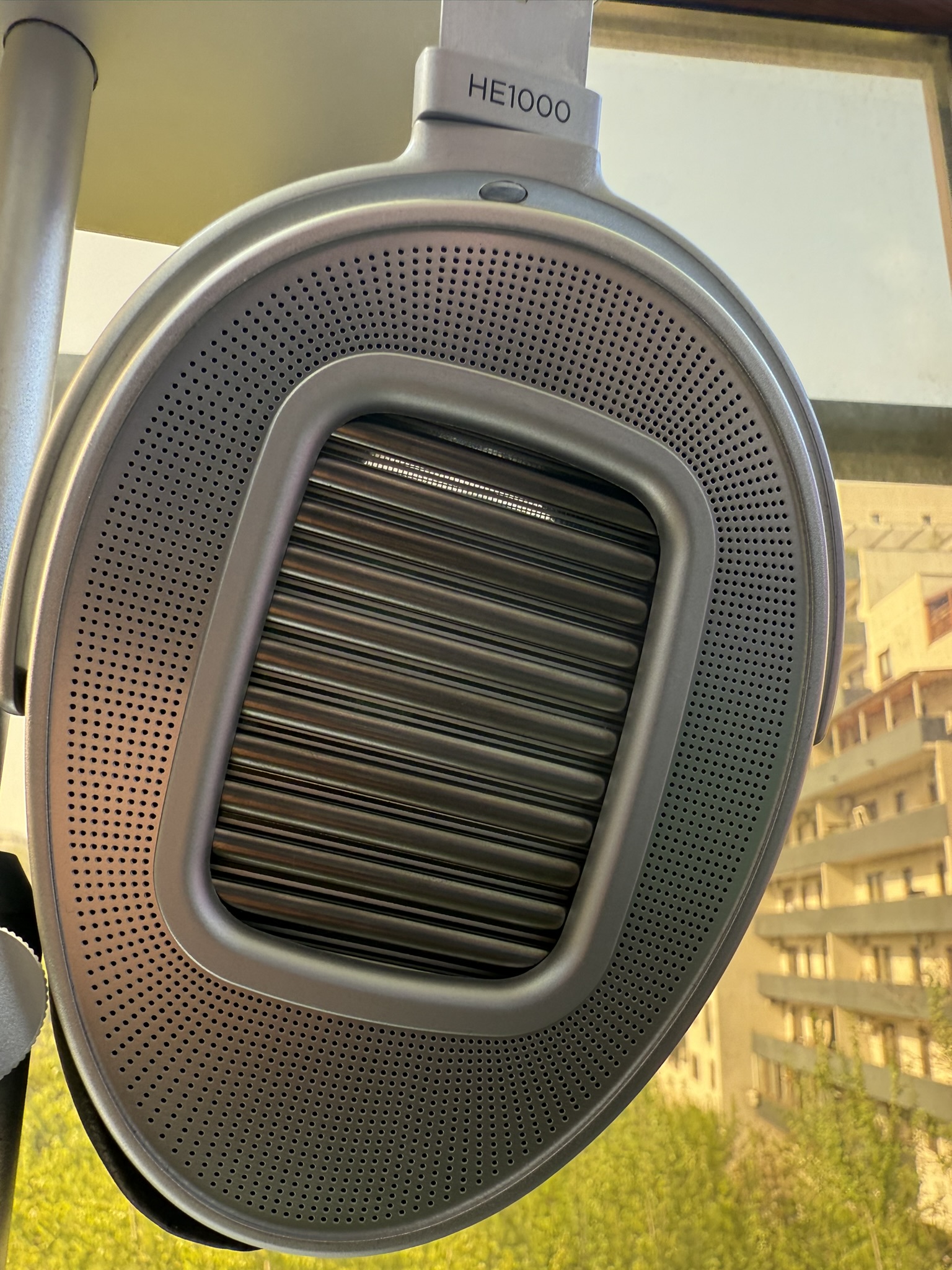
The THD measurements (below) showed to be quite impressive, most of the FR being close to 0.05%. There seems to be a slight discrepancy in the right channel, that is straying towards 1% in the 1-2.2kHz range. Pulling out my magnifying glass, I noticed the driver seemed a smidge off-kilter on its upper left. While I won’t claim to be the next Sherlock Holmes, I am speculating that to be the root cause of this discrepancy. This wasn’t noticeable in the listening sessions, as it still sounded impressively clean overall, but a small part of me wonders – could it have sounded even better if it was in perfect harmony with its left counterpart? 🎧🔍


Below you can find the spectrogram and as suspected, we have no ringing present.


Now, taking a detour, I slipped on the Wicked Earpads. They certainly upped their game when it came to reducing the heat – being thicker (more space for your ears) and being made out of cooling gel. I was certain I would end up preferring the wicked pads, but I was wrong! The lower midrange seemed to lose its groove a bit. The vocals, which I adored for their intimacy with the stock pads, took a step back. And that presence between 3-4kHz? Dipped, leaving behind a somewhat more noticeable peak at 4kHz. Basically we have a dip and then a sharp peak. This leaves a void in that area of the sound.
But hey, on the bright side, they offered an airy feeling in the upper treble and stretched out the soundstage a tad. I have to say that I ended preferring the stock pads, but it sure is a matter of taste.


If you are wondering how the default Audeze Presets affect the fr response:


This is how the Dolby Presets affect the fr response:

This contains only the dolby presets with the intelligent equalizer disabled:

As you can see, the THD is impressive with all the presets:

Conclusions
Alright, audio aficionados, let’s wrap this up!
From where I’m sitting (or rather, listening), these headphones are nothing short of a sonic revelation. Their feature list is bursting and in terms of sound quality, they align with audiophile expectations.
When you tally up all they bring to the table and then peek at the price tag, it’s hard not to shout, “Shut up and take my money!”
Rewind to 12 years ago. Remember those times? The best headphones felt like they were in short supply, and choices? Limited. Not to say that you did not even dare to dream of good wireless headphones.
Now, zoom back to today. It’s mind-boggling to think Audeze has packed such top-tier performance into a wireless headphone, without the need for any fancy external systems. And those features? Cherry on top. A tip of the hat to you, Audeze – color me majorly impressed.
The maxwell is my number one recommendation for anyone who wants to get deeper into this hobby. They just need the headphones, no external system, no complications. You need to pay more than 1000$ to get something similar or better.
Now, a small wish before I sign off: I’d be over the moon to test a Maxwell pair where both drivers harmonize perfectly across the frequency range without the small thd discrepancy mentioned above. I have a hunch they could impress us even more!




Leave a Reply